How to Clean Luggage: A Complete Guide
*We may earn a commission for purchases made using our links. Please see our disclaimer to learn more.
Your luggage goes through more than you might realize. It rolls across airport floors, gets handled by baggage crews, sits in car trunks, brushes against dirty sidewalks, and occasionally becomes the victim of a leaking shampoo bottle. Even when a suitcase still looks reasonably clean, its wheels, handles, seams, pockets, and interior lining can collect dirt, dust, crumbs, oils, and odors over time.
Knowing how to clean luggage properly can help keep your suitcase looking better, smelling fresher, and ready for your next trip. More importantly, the right cleaning technique can help prevent unnecessary damage. A method that works well on a polycarbonate shell may be too aggressive for glossy plastic, coated fabric, aluminum, or leather.
The safest approach is to identify your luggage material first, remove loose debris, use the mildest effective cleaning solution, and allow the suitcase to dry completely before storing it.
“Wash with warm water and mild dish soap, then rinse.”
— Samsonite, Product Care & Cleaning
4 Useful Products for Cleaning Luggage
1. ForceField Fabric Cleaner Professional Strength


ForceField Fabric Cleaner Professional Strength is a deep-cleaning solution designed for water-safe fabrics and fibers, making it a practical choice for cleaning softside luggage, fabric suitcase interiors, upholstery, rugs, carpeting, and clothing. Its 22-ounce spray bottle is suitable for targeting stains, dirt, and grime without requiring a full wash. For luggage care, it works best as a spot cleaner on compatible fabric surfaces, especially when mild soap and water are not enough.
- Deep Cleaning: Penetrates water-safe fabric fibers to help lift stubborn dirt and stains.
- Versatile Use: Suitable for luggage, upholstery, carpeting, rugs, and other compatible fabrics.
- Convenient Spray Bottle: Makes it easy to target specific stained areas without soaking the entire surface.
- Material Limitations: Should only be used on fabrics that are safe for water-based cleaning.
- Spot Testing Required: Some luggage coatings or dyes may react differently to the formula.
- Not for Hardshell Cases: Designed primarily for fabric surfaces rather than plastic, aluminum, or leather luggage.
Best for: Softside luggage and water-safe fabric
ForceField Fabric Cleaner is designed for water-safe fabrics and fibers, making it a useful option when ordinary soap and water cannot handle stains on compatible softside luggage.
It is particularly useful for localized stains rather than soaking an entire suitcase.
Always check your luggage’s care instructions first because some softside suitcases have protective coatings that require manufacturer-specific cleaning methods.
The product continues to appear among current U.S. fabric and upholstery cleaner listings.
2. Mr. Clean Magic Eraser


Mr. Clean Magic Eraser Extra Durable is a melamine cleaning pad designed to remove stubborn marks, scuffs, grime, and surface buildup with minimal added cleaning product. For luggage care, it can be especially useful on compatible hardshell suitcases where ordinary soap and water have not fully removed black transfer marks or surface scuffs.
- Strong Scuff Removal: Helps lift stubborn black marks and surface grime from compatible hardshell luggage.
- Easy to Use: Typically requires only water, making it convenient for quick suitcase touch-ups.
- Durable Pads: The Extra Durable construction is designed to withstand heavier cleaning than standard melamine pads.
- Abrasive Surface: Can dull, scratch, or alter delicate and glossy luggage finishes if used too aggressively.
- Not for Every Material: Unsuitable for leather, delicate fabrics, and many coated surfaces.
- Pads Wear Down: Melamine foam gradually breaks apart during use and may need frequent replacement.
Best for: Stubborn scuffs on suitable matte hardshell luggage
A Magic Eraser can be helpful for black marks and transfer scuffs that remain after cleaning a compatible hardshell case with soap and water.
Use very light pressure.
Most importantly, do not assume it is safe for every hardshell finish. Away recommends trying a magic eraser on certain shells but specifically warns against using one on glossy finishes because it can cause damage.
Mr. Clean Magic Eraser products also remain widely available in the current U.S. market.
3. Weiman Leather Cleaner & Conditioner


Weiman Leather Cleaner, Conditioner & Protector is a multi-purpose leather care formula designed to clean, condition, and help protect finished leather surfaces. For luggage, it can be a useful choice for leather suitcases, travel bags, briefcases, and other compatible leather accessories that need both cleaning and conditioning.
- 3-in-1 Care: Cleans, conditions, and helps protect finished leather in one application.
- UV Protection: Contains protectants designed to help reduce fading and cracking from sun exposure.
- Restores Appearance: Helps refresh leather that looks dry, dull, or worn from regular use.
- Not for All Leather: May not be suitable for suede, nubuck, or unfinished leather.
- Testing Recommended: Some dyes and specialty finishes may react differently to the formula.
- Can Leave Residue: Applying too much product may leave the surface feeling slick until it is properly buffed.
Best for: Finished leather luggage and leather travel bags
Weiman Leather Cleaner & Conditioner combines cleaning and conditioning in one product and is designed for finished leather surfaces, including bags.
It can be useful for travelers who own leather suitcases, duffels, briefcases, or travel accessories.
Use it only when compatible with your particular leather. Suede, nubuck, unfinished, and specialty leathers may require different products.
Current U.S. product data shows Weiman Leather Cleaner & Conditioner among popular leather-care options.
4. OXO Good Grips Deep Clean Brush Set


The OXO Good Grips Deep Clean Brush Set includes two compact cleaning brushes designed to reach narrow, awkward, and heavily soiled areas. For luggage care, the set is especially useful around suitcase wheels, zipper tracks, seams, handle joints, corner guards, and other spots that are difficult to clean with a cloth alone.
- Reaches Tight Areas: Useful for cleaning wheels, seams, zipper tracks, and other hard-to-access parts of luggage.
- Two Brush Sizes: Includes both large and small brushes for different levels of detail cleaning.
- Comfortable Grip: Nonslip handles provide better control while scrubbing stubborn dirt.
- Not for Delicate Surfaces: Firm nylon bristles may be too abrasive for leather, glossy finishes, or delicate fabrics.
- Manual Cleaning Required: Requires more effort than spray-and-wipe cleaning products.
- Small Coverage Area: Best for detailed cleaning rather than quickly cleaning an entire suitcase exterior.
Best for: Wheels, zipper areas, seams, handles, and hard-to-reach crevices
A small detailing brush is one of the most useful luggage-cleaning tools because suitcases contain many areas a normal cloth cannot reach.
The OXO Good Grips Deep Clean Brush Set includes brushes with durable nylon bristles designed for narrow spaces and accumulated grime.
Use the brushes primarily around wheels, durable hardware, zipper areas, and other appropriate surfaces rather than aggressively scrubbing delicate fabric, leather, or glossy shells.
What You Need to Clean Luggage
You do not need an elaborate collection of cleaning supplies. For most suitcases, a microfiber cloth, vacuum cleaner with a crevice attachment, bowl of warm water, mild dish soap, soft cleaning brush, and dry towel will handle routine maintenance.
Depending on the luggage material and the type of stain, you might also use a fabric-safe stain remover, leather cleaner, or gentle melamine sponge.
Avoid assuming that stronger cleaners mean better results. Bleach, aggressive solvents, abrasive powders, and strong degreasers can discolor fabrics, damage coatings, dull plastic shells, or affect water-resistant finishes.
Always check the manufacturer’s care label or instructions when available.
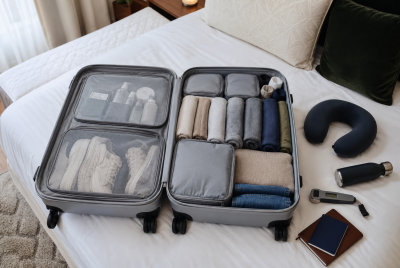
Step 1: Empty the Suitcase Completely
Before cleaning, remove everything from the suitcase.
Check the main compartment, zippered dividers, shoe compartments, exterior pockets, hidden pockets, and document sleeves. Travelers commonly leave small objects such as receipts, coins, tissues, luggage tags, and charging cables behind.
Remove any detachable packing organizers or washable liners.
Next, open every zipper and shake the suitcase upside down over a trash can or outdoors. This removes larger particles before you begin vacuuming.
Step 2: Vacuum the Interior
Use a vacuum with a crevice attachment to clean the lining, corners, pockets, zipper channels, and areas around internal straps.
Vacuuming is particularly useful for removing sand, crumbs, lint, hair, and dried dirt without introducing unnecessary moisture.
Travelpro recommends emptying the bag, removing washable components when appropriate, vacuuming debris from the interior, and allowing luggage to air completely before storage.
For heavily traveled luggage, spend extra time along seams and underneath compression straps. These areas tend to trap debris that ordinary shaking does not remove.
Step 3: Clean the Interior Lining
Once loose debris has been removed, inspect the lining for stains.
Mix a small amount of mild soap with warm water. Dip a microfiber cloth into the solution and wring it thoroughly. The cloth should be damp rather than soaking wet.
Gently blot or wipe stained areas.
Do not saturate the lining because moisture can become trapped between the fabric and the suitcase shell.
For stubborn stains, apply a small amount of fabric-safe cleaner to an inconspicuous section first. Follow the cleaner’s directions and avoid excessive scrubbing.
After cleaning, leave the suitcase completely open in a ventilated room until the lining is dry.
How to Clean Hardside Luggage
Hardside suitcases are generally among the easiest types of luggage to maintain.
Common shell materials include polycarbonate, polypropylene, acrylonitrile butadiene styrene (ABS), and various plastic composites.
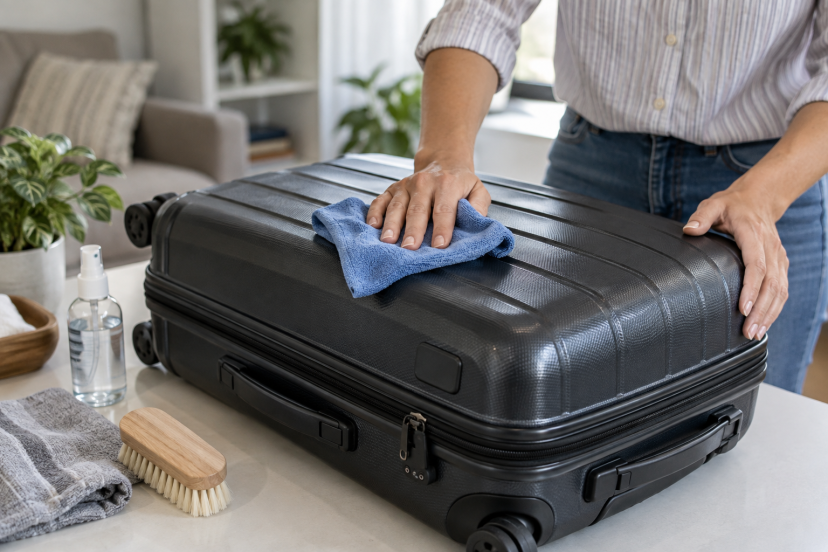
Begin by wiping loose dirt away with a damp microfiber cloth.
Next, add a few drops of mild dish soap to warm water. Dip your cloth into the mixture, wring it out, and wipe the suitcase from top to bottom.
Pay particular attention to corners, areas around handles, wheel housings, and the bottom edge of the suitcase.
Samsonite recommends warm water and mild dish soap for its hardside luggage. Travelpro similarly recommends mild soap and water for hardshell exteriors.
After cleaning, wipe the shell again using a clean damp cloth to remove soap residue.
Finish with a dry microfiber towel.
How to Remove Scuff Marks From Hardside Luggage
Scuff marks are common on checked luggage.
Start with soap and water. Many marks disappear with gentle rubbing.
If the mark remains, some matte hardshell cases can tolerate careful use of a damp melamine sponge. Away specifically suggests a magic eraser for marks that ordinary soap and water cannot remove from certain suitcase shells. However, Away warns against using one on glossy finishes because it may damage the surface.
That distinction is important.
A melamine sponge works through mild abrasion. It can remove scuffs effectively, but it can also change the sheen of delicate surfaces.
Always test a tiny hidden section before treating visible areas.
How to Clean Softside Luggage
Softside luggage requires more caution because fabric can absorb both dirt and cleaning solutions.
Materials commonly include polyester and nylon, sometimes finished with water-resistant or stain-resistant coatings.
Start by vacuuming the exterior carefully.
Use the brush attachment where appropriate to lift dust from textured fabric.
For ordinary dirt, dampen a microfiber cloth with a mild soap solution and blot the affected area. Avoid soaking the fabric.
Some luggage manufacturers specify different cleaning methods for their particular coatings. For example, Travelpro advises a 50/50 alcohol-and-water solution for certain softside products. Because manufacturer recommendations vary, check the care instructions for your exact bag before applying alcohol, stain remover, or another solvent.
When cleaning a stain, work from the outside edge toward the center. This can help prevent the stain from spreading outward.
Blot rather than aggressively scrub whenever possible.
Leave every zipper and pocket open while the suitcase air-dries.
How to Clean Leather Luggage
Leather luggage needs a different approach.
Too much water can affect the finish, and ordinary household cleaners can strip natural oils or discolor the material.
Begin by wiping dust away with a clean, dry microfiber cloth.
For finished leather, use a cleaner specifically formulated for leather. Apply a small amount according to the manufacturer’s instructions, preferably to the cloth rather than pouring the product directly onto the suitcase.
Work one small section at a time.
After cleaning, a suitable leather conditioner can help maintain suppleness and reduce the dry appearance that develops as leather ages.
Do not use this method automatically on suede, nubuck, unfinished leather, or specialty leather. Those materials can require dedicated care products.
Always test a hidden area first.
How to Clean Aluminum Luggage
Aluminum luggage develops scratches and marks differently from plastic luggage.
In many cases, those marks are considered part of the natural character of the suitcase rather than damage.
For general cleaning, use a soft damp cloth. A small amount of mild soap may be appropriate depending on the manufacturer.
Avoid abrasive cleaners, scouring pads, and aggressive polishing compounds unless the luggage brand specifically approves them.
Away recommends a soft damp cloth with mild soap for its aluminum luggage and specifically advises avoiding abrasive cleaners.
Dry aluminum surfaces thoroughly after cleaning.
How to Clean Luggage Wheels
Suitcase wheels can become surprisingly dirty.
They collect dust, hair, fibers, mud, sand, and small pieces of debris from floors and sidewalks.
Lay the suitcase on its side or upside down so the wheels are easy to reach.
First remove wrapped hair or threads carefully. Tweezers can help reach debris trapped around the axle.
Use a dry detailing brush to loosen dirt from grooves and wheel housings.
For washable wheel surfaces, dampen a cloth with mild soapy water and wipe them clean. Avoid flooding bearings, axles, or internal wheel mechanisms with water.
Rotate each wheel as you clean so you can inspect the entire surface.
Dry the wheels thoroughly before returning the suitcase upright.
How to Clean Luggage Handles
Handles come into frequent contact with hands, airport surfaces, vehicle trunks, and baggage equipment.
Wipe hard handles with a damp cloth and mild soap.
Retractable telescoping handles should be extended fully so you can clean the exposed rails. Wipe them rather than spraying liquid directly into the handle mechanism.
For padded fabric handles, spot-clean rather than soaking them.
Allow everything to dry before retracting the handle.
How to Clean Luggage Zippers
Zippers work best when their teeth and tracks remain free of grit.
Use a soft dry brush to remove dust and dirt.
A detailing brush can reach around zipper teeth and corners that are difficult to clean with a cloth.
Avoid saturating zipper tracks with cleaning solution.
Once clean, open and close the zipper slowly to make sure it moves smoothly. If the zipper is damaged or misaligned, cleaning alone will not correct the mechanical problem.
How to Remove Odors From Luggage
Unpleasant suitcase odors often develop because damp clothing, shoes, toiletries, food, or dirty laundry were packed inside.
Begin by vacuuming and cleaning the lining.
Then leave the luggage fully open in a dry, ventilated room.
Samsonite suggests a diluted solution of one part vinegar to five parts water for odor treatment on certain softside luggage, followed by airing the suitcase out.
Because vinegar may not be appropriate for every material or coating, confirm compatibility first.
For mild odors, simply airing the bag after cleaning may be enough.
Avoid masking persistent smells with heavy fragrance sprays. If the underlying moisture or contamination remains, the odor usually returns.
How to Remove Mold or Mildew From Luggage
If luggage has been stored in a humid basement, garage, closet, or attic, you may discover mildew or mold.
Take the suitcase outdoors before disturbing visible growth when possible.
Wear appropriate protective equipment if significant mold is present.
For a very small affected area, consult the suitcase manufacturer’s cleaning recommendations before treatment. Some surfaces can be cleaned, while porous linings with substantial contamination may be difficult to restore completely.
If mold covers a large portion of the suitcase, has penetrated foam or lining, or repeatedly returns after cleaning, replacement may be safer and more practical than trying to salvage the bag.
Preventing the problem is much easier.
Samsonite notes that temperature and humidity extremes can age luggage and recommends periodically airing luggage stored in places such as attics and basements.
Cleaning Mistakes to Avoid
One of the most common mistakes is treating every suitcase the same way.
Do not machine wash luggage unless the manufacturer explicitly says it is washable.
Avoid soaking the suitcase. Water trapped beneath the liner or inside structural components can take a long time to evaporate.
Do not automatically use bleach to remove stains. It can discolor fabric and damage finishes.
Avoid highly abrasive sponges on glossy or polished shells.
Do not spray cleaning products directly into wheel bearings, telescoping-handle mechanisms, locks, or zipper hardware.
And never put freshly cleaned luggage directly into storage while it is damp.
How Often Should You Clean Luggage?
You do not necessarily need to deep-clean your suitcase after every short trip.
A quick post-trip routine, however, is worthwhile.
Empty the bag, shake or vacuum the interior, inspect the exterior for spills or stains, wipe heavily touched areas, check the wheels, and let the suitcase air before storing it.
Deep cleaning can be done whenever the suitcase becomes visibly dirty, develops an odor, experiences a spill, or returns from a particularly messy trip.
Travelpro recommends making maintenance part of the post-trip routine rather than waiting for stains and dirt to build up.
How to Store Luggage After Cleaning
Cleaning is only half the job. Proper storage helps keep the suitcase clean until the next trip.
Make sure every part of the luggage is completely dry.
Store it in a cool, ventilated location with relatively low humidity. Avoid damp basements or extremely hot attics when possible.
Keep zippers closed once the suitcase is fully dry so dust is less likely to collect inside.
If you own multiple suitcase sizes from the same collection, they may be able to nest inside one another to save space.
Check stored luggage periodically, especially in humid climates.
Travelpro notes that leaving dirt and debris inside stored luggage can contribute to odors, mold, and mildew.
Final Thoughts
Learning how to clean luggage is mostly about using the right technique for the material rather than reaching for the strongest cleaner available.
For most routine dirt, warm water, mild soap, a microfiber cloth, a vacuum, and a little patience are enough. Hardshell cases can generally tolerate gentle wiping, while fabric luggage benefits from controlled spot cleaning. Leather requires specialized products, and aluminum should be treated gently to avoid unnecessary abrasion.
Pay special attention to wheels, handles, seams, pockets, and the interior lining, because these areas often collect more grime than the obvious exterior surfaces.
Most importantly, check the manufacturer’s care instructions whenever possible and allow your suitcase to dry completely before storing it.
A few minutes of cleaning after a trip can keep your luggage fresher, make packing more pleasant, and help your suitcase remain travel-ready for many journeys to come.
Frequently Asked Questions
1. What is the best way to clean luggage?
For most luggage, begin by emptying and vacuuming the suitcase. Use a soft cloth with warm water and a small amount of mild soap for general cleaning, adjusting the method according to whether the suitcase is hardside, fabric, aluminum, or leather. Always follow the manufacturer’s instructions when they differ from general cleaning advice.
2. Can you wash a suitcase with soap and water?
Many hardshell suitcases can be cleaned with mild soap and warm water. Some softside luggage can also be spot-cleaned this way, although coated fabrics may have special requirements. Do not soak the suitcase, and do not machine wash it unless the manufacturer specifically states that it is machine washable.
3. How do you remove black scuff marks from luggage?
Start with a microfiber cloth and mild soapy water. If a stubborn mark remains on a compatible matte hardshell surface, a damp melamine sponge may help. Test it in an inconspicuous area first and avoid using abrasive sponges on glossy finishes, which can become dull or damaged.
4. How do you clean the inside of a suitcase?
Empty every pocket, remove detachable components, shake out loose debris, and vacuum the lining with a crevice attachment. Spot-clean stains using a lightly dampened cloth and compatible cleaner. Keep the suitcase open until the interior is completely dry before storing it.
5. How do you make old luggage smell fresh again?
Vacuum and clean the interior first rather than simply covering the smell with fragrance. Air the suitcase in a well-ventilated location until completely dry. For compatible softside luggage, some manufacturers recommend a heavily diluted vinegar solution for odor control. Persistent musty odors can indicate trapped moisture or mildew that needs additional attention.