How to Maximize Suitcase Space: Smart Packing Tips for Every Trip
*We may earn a commission for purchases made using our links. Please see our disclaimer to learn more.
Trying to close an overstuffed suitcase while sitting on the lid is usually a sign that the problem is not the size of the bag—it is how the available space is being used. Whether you are packing a carry-on for a weekend getaway or checking a larger suitcase for a two-week trip, a few deliberate packing techniques can dramatically increase how much you can bring without creating a disorganized, overweight bag.
Learning how to maximize suitcase space starts before the first shirt goes into your luggage. Choosing versatile clothing, eliminating unnecessary items, using the right folding technique, filling overlooked spaces, and organizing belongings strategically can make a suitcase feel significantly larger.
The goal is not simply to squeeze as many possessions as possible into your luggage. Efficient packing should also keep belongings accessible, reduce wrinkles, protect fragile items, and make it easier to stay organized throughout your trip.
“Pack items in layers (shoes one layer, clothes one layer, electronics one layer, etc.).”
Source: Transportation Security Administration (TSA), Travel Checklist
Key Takeaways
- Start with a packing list and eliminate unnecessary or duplicate items before putting anything into your suitcase.
- Roll flexible clothing and fold structured or wrinkle-prone garments instead of relying on one packing method for everything.
- Use compression packing cubes to organize clothing while reducing the amount of space bulky fabrics occupy.
- Fill shoes, suitcase corners, gaps around handles, and other unused spaces with small items.
- Wear your bulkiest clothing and shoes while traveling when practical.
- Pack versatile clothing that can be combined into several outfits.
- Downsize toiletries and avoid carrying full-size containers when smaller quantities will cover the trip.
- Leave a little unused space rather than filling the suitcase completely before departure.
1. Start With the Right Suitcase
Packing efficiently is much easier when the suitcase matches the type and length of your trip.
A weekend trip may only require a compact carry-on, while longer vacations or trips involving cold-weather clothing may justify checked luggage.
Pay attention to the suitcase’s interior construction as well as its exterior measurements. Thick linings, bulky wheel housings, large internal frames, and complicated divider systems can consume usable packing space.
A simple rectangular interior generally gives you more freedom to arrange packing cubes and clothing efficiently.
Expandable suitcases can be useful, but treat the expansion zipper as extra capacity rather than permission to pack everything you own. Expanding a suitcase can also affect its dimensions, which matters when you are trying to stay within an airline’s baggage limits.
2. Make a Packing List Before You Pack
One of the most effective suitcase space-saving techniques does not involve folding anything.
It involves packing less.
Create a complete packing list before opening your suitcase. Divide it into categories such as:
- Clothing
- Shoes
- Toiletries
- Electronics
- Medication
- Documents
- Accessories
- Travel essentials
Then review every item and ask whether you will realistically use it.
People frequently pack clothing for hypothetical situations: an extra formal dinner, unexpectedly cold weather, several backup outfits, or multiple pairs of shoes that serve essentially the same purpose.
A useful rule is to choose items that can perform more than one function.
For example, a neutral button-down shirt might work for sightseeing during the day and dinner at night. Comfortable sneakers can potentially handle walking, casual dining, and travel days.
The fewer single-purpose items you pack, the more efficient your suitcase becomes.
3. Plan Outfits Instead of Packing Individual Clothes
Instead of selecting shirts, pants, skirts, and jackets independently, build complete outfits.
Choose a coordinated color palette so that most tops work with most bottoms. Neutral shades are particularly useful because they make mixing and matching easier.
For example, three tops and three bottoms do not necessarily equal three outfits. If each piece works with the others, they can produce several combinations.
This approach prevents you from packing clothing that looks appealing individually but never gets worn because it does not match anything else in the suitcase.
For longer trips, consider whether laundry will be available. Washing clothing once during a two-week vacation can significantly reduce the number of garments you need to carry.
4. Roll Some Clothes and Fold Others
The common advice to “roll everything” is too simplistic.
Rolling works very well for flexible garments such as:
- T-shirts
- Leggings
- Casual shorts
- Pajamas
- Underwear
- Workout clothing
- Lightweight dresses
Rolling compresses these garments and makes it easier to arrange them tightly without leaving large gaps.
However, structured or wrinkle-prone pieces are generally better folded.
Consider folding:
- Dress shirts
- Blazers
- Structured pants
- Linen clothing
- Formal dresses
- Delicate fabrics
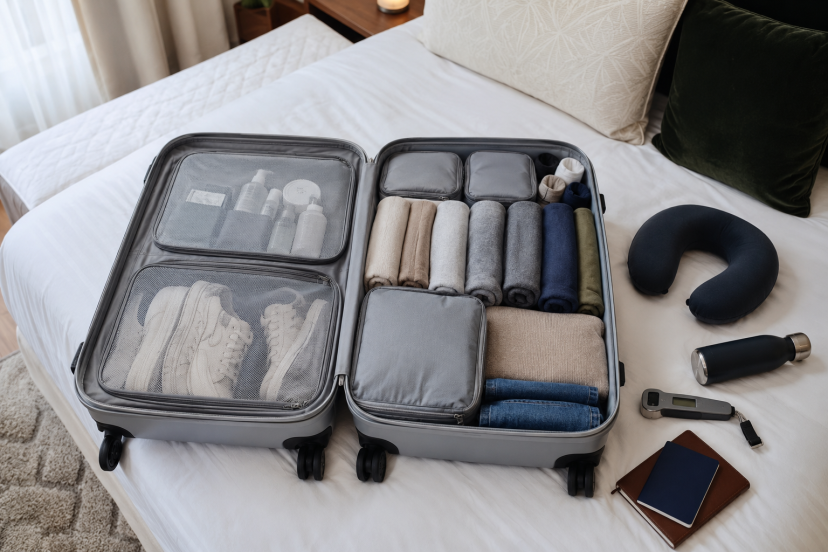
The most efficient suitcase often combines both techniques.
Use tightly rolled garments to fill narrow spaces while laying folded clothing across broader, flatter sections.
5. Use Compression Packing Cubes Strategically
Packing cubes are useful primarily because they create organization. Compression packing cubes go one step further by reducing the volume occupied by clothing.
You place clothing inside the cube, close the main zipper, and then close a second compression zipper that pulls the sides together.
They are especially helpful for:
- Sweaters
- T-shirts
- Underwear
- Activewear
- Children’s clothing
- Soft pants
- Pajamas
However, avoid stuffing compression cubes until the zippers are under extreme tension. An excessively packed cube becomes a rigid block that may actually be harder to fit efficiently into your suitcase.
Think of compression cubes as modular building blocks.
Place larger cubes across the broadest section of the suitcase and use smaller cubes around wheel wells, corners, and handle channels.
Recommended Product: BAGSMART Compression Packing Cubes


The BAGSMART Compression Packing Cubes are lightweight suitcase organizers designed to help travelers pack clothing more efficiently while keeping different items separated. An additional compression zipper helps reduce the volume of packed clothes, making the cubes particularly useful for sweaters, trousers, shirts, underwear, and other soft garments.
- Space-Saving Compression: Extra compression zippers help reduce the amount of suitcase space clothing occupies.
- Lightweight Design: Thin, lightweight material provides organization without adding much additional baggage weight.
- Multiple Sizes: Different cube sizes make it easier to separate shirts, pants, underwear, and other travel essentials.
- Can Become Overstuffed: Filling the cubes too tightly may make the compression zipper more difficult to close.
- Doesn't Reduce Weight: Compression creates more room in a suitcase but does not make packed belongings lighter.
- Extra Packing Step: Travelers who prefer very simple packing may find organizing everything into separate cubes unnecessary.
The BAGSMART Compression Packing Cubes are a useful option for travelers who want both organization and compression. The set includes multiple cube sizes, allowing different categories of clothing to remain separated.
Use a larger cube for shirts and pants, a medium cube for sleepwear or activewear, and smaller cubes for underwear and accessories.
The biggest advantage is not merely compression—it is being able to remove one category of belongings without disturbing everything else inside your suitcase.
6. Fill Every Empty Space
Suitcases contain more unused space than most travelers realize.
The areas around wheels and telescoping-handle rails often create narrow channels that are difficult to fill with normal folded clothes.
These spaces are ideal for:
- Socks
- Underwear
- Belts
- Charging cables
- Swimwear
- Ties
- Small accessories
Think of packing your suitcase like completing a puzzle.
Large items establish the main structure. Smaller, flexible items should then fill the remaining gaps.
Do not automatically place every small object into a separate pouch. Too many organizational bags can create unnecessary bulk.
7. Pack Inside Your Shoes
Shoes contain valuable empty space.
Before packing them, fill the interior with small, clean items such as:
- Rolled socks
- Belts
- Charging cables in protective pouches
- Small accessories
- Other non-fragile items
This technique allows the hollow interior of each shoe to serve as storage.
Place shoes in shoe bags or lightweight plastic bags so their soles do not touch your clothing.
Shoes are also relatively heavy, so placing them near the wheel end of an upright suitcase may help the bag feel more balanced when you are rolling it.
8. Limit the Number of Shoes
Shoes are among the biggest space consumers in a suitcase.
For many trips, three pairs are enough:
- Comfortable everyday walking shoes
- A more polished or activity-specific pair
- Lightweight sandals or similar footwear when appropriate
Wear the bulkiest pair while traveling.
Packing heavy sneakers or boots while wearing thin shoes wastes valuable luggage capacity that could otherwise accommodate several pieces of clothing.
9. Wear Your Bulkiest Clothing
Your body effectively becomes additional luggage capacity on travel day.
If the weather and comfort level permit, wear bulky items rather than packing them.
Examples include:
- Boots
- Sneakers
- Jeans
- Jackets
- Hoodies
- Sweaters
You can always remove a jacket or sweater after boarding.
This strategy becomes particularly valuable during winter trips, when coats, thick knitwear, and boots can consume a large portion of a suitcase.
10. Use Vacuum Bags Carefully
Vacuum or compression storage bags can dramatically reduce the volume of soft items such as sweaters and jackets.
They can be particularly useful when packing bulky winter clothing.
Recommended Product: Vacbird Travel Vacuum Bags

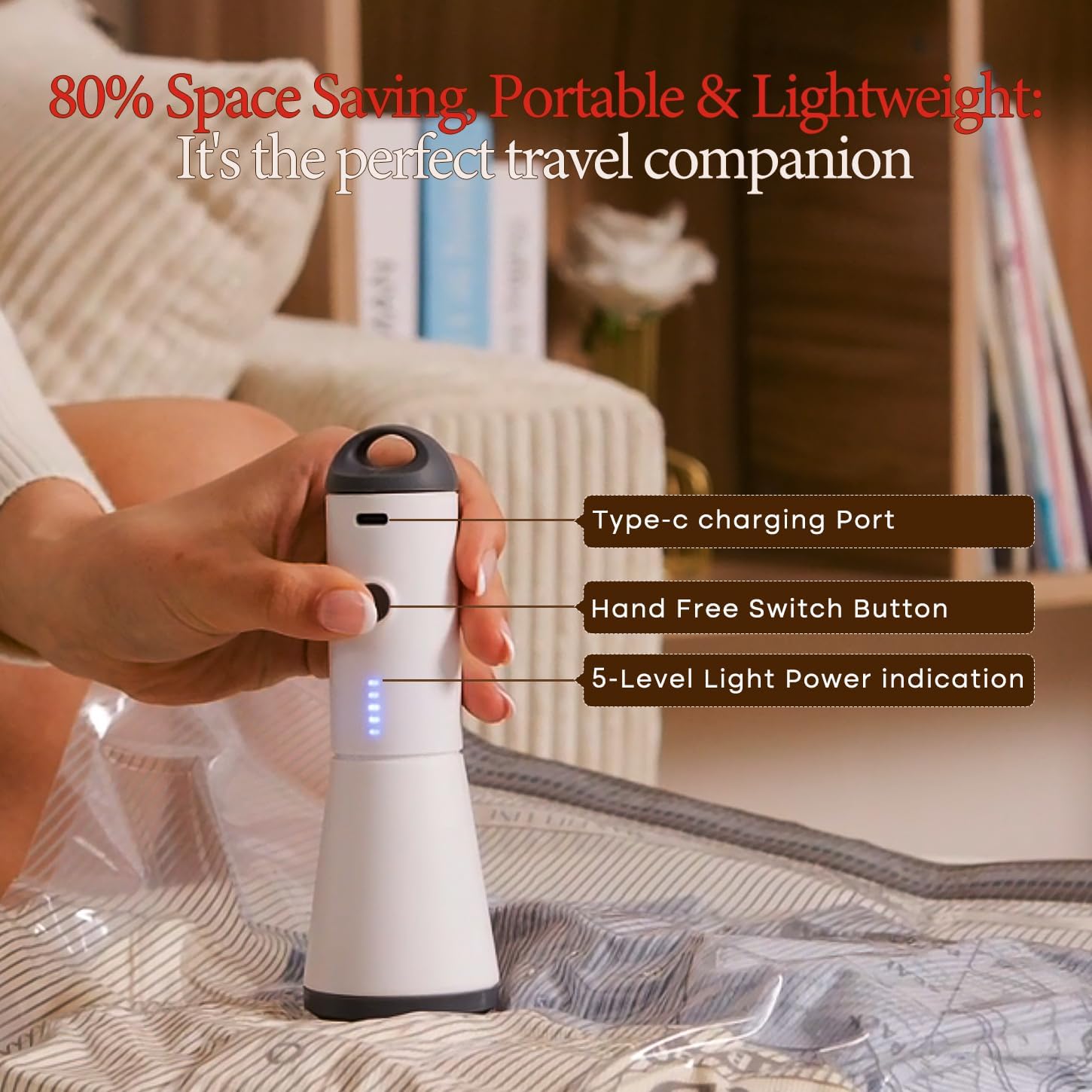

The Vacbird Travel Vacuum Bags with Rechargeable Pump are designed to compress bulky clothing and free up valuable suitcase space. The nine-bag travel set includes three different bag sizes for packing clothes, footwear, and other soft travel essentials, while the semi-transparent design makes it easier to identify contents without opening each bag.
- Strong Compression: Vacuum sealing can significantly reduce the volume of bulky clothing and other soft items.
- Rechargeable Pump: The compact cordless pump can compress multiple bags and recharge through USB.
- Multiple Bag Sizes: Three travel-friendly sizes provide flexibility for clothing, shoes, and different suitcase layouts.
- Adds Extra Weight: The pump and bags take up some luggage weight even though they save physical space.
- Doesn't Reduce Item Weight: Compression makes clothing smaller but does not help with airline baggage weight limits.
- Requires Resealing: Bags may need to be recompressed when repacking during or after a trip.
The Vacbird Travel Vacuum Bags with Rechargeable Air Pump are designed for travelers who need to compress bulky clothing in limited luggage space. The portable pump removes air from the bags, helping flatten items that would otherwise occupy substantial room.
However, vacuum bags introduce an important problem: they reduce volume, not weight.
Compressing several sweaters may suddenly create room for additional belongings, but the suitcase still contains the combined weight of everything inside.
That makes it surprisingly easy to create an overweight checked bag.
Use vacuum compression primarily when physical volume—not baggage weight—is your main limitation.
11. Pack Toiletries in Travel Sizes
A large toiletry bag can consume almost as much suitcase space as a packing cube full of clothing.
Avoid bringing full-size containers unless you genuinely expect to use most of the product.
Transfer shampoo, conditioner, moisturizer, and similar products into smaller reusable travel containers when appropriate.
For carry-on travelers, liquid restrictions also matter. The TSA generally limits carry-on liquids, aerosols, gels, creams, and pastes to containers of 3.4 ounces or less, fitting within the permitted quart-size bag.
Solid alternatives can sometimes save additional space. Depending on your routine, this might include solid shampoo, bar soap, or other compact personal-care products.
You may also be able to purchase inexpensive toiletries after reaching your destination instead of transporting them.
12. Keep Cables and Electronics Compact
Technology accessories can become surprisingly bulky when chargers, cables, adapters, headphones, and power banks are thrown into a suitcase individually.
Bring only the cables you actually need.
If several devices can charge through the same type of cable, avoid packing duplicates unless redundancy is genuinely necessary.
Use a small organizer pouch for electronics rather than multiple cases.
For air travel, remember that some electronics and batteries are subject to specific safety requirements, so verify current airline and government transportation rules before packing.
13. Layer Your Suitcase Intentionally
Efficient packing is not just about fitting things together. Accessibility matters too.
Items you probably will not need until reaching your accommodation can sit deeper in the suitcase.
Items you may need during transit should remain accessible.
For example, keep essentials such as medications, travel documents, electronics, liquids, or an emergency change of clothing in easily reachable locations when appropriate.
Layering also makes airport screening easier because you do not have to unpack half your suitcase to retrieve something.
14. Keep Dirty Clothes Separate
Your packing system should continue working after the trip begins.
A laundry bag prevents worn clothing from spreading throughout the suitcase and makes repacking easier.
Recommended Product: Veken Packing Cubes


The Veken Compression Packing Cubes 9-Piece Set is an all-in-one luggage organization system designed to help travelers separate clothing, toiletries, shoes, laundry, and smaller essentials while making better use of suitcase space. The set includes four compression cubes in small, medium, large, and extra-large sizes, along with toiletry bags, a laundry bag, shoe storage, and a multipurpose pouch.
- Complete Organization: Includes compression cubes, toiletry bags, a laundry bag, shoe storage, and an accessory pouch.
- Easy Compression: Built-in compression zippers reduce clothing bulk without requiring additional equipment.
- Visible Contents: Large mesh panels help travelers quickly identify items without opening every cube.
- More Pieces to Manage: The nine-piece system may be excessive for travelers who prefer minimalist packing.
- Limited Heavy Compression: Zipper compression is useful for clothing but will not flatten bulky items as much as vacuum bags.
- Takes Planning: Using multiple organizers efficiently requires arranging the cubes according to suitcase size and layout.
The Veken Packing Cubes provide several organizers for separating different clothing categories and typically include useful additional storage pieces for travel organization.
One approach is to reserve one cube or laundry compartment for worn clothes while keeping the remaining cubes organized by clothing type.
This makes hotel changes easier because you do not need to reorganize the entire suitcase every morning.
15. Avoid Overpacking “Just in Case” Items
The phrase “just in case” may be responsible for more overpacked suitcases than almost anything else.
One extra shirt may seem insignificant. But an extra shirt, pants, jacket, shoes, toiletries, and several accessories quickly consume a significant portion of your luggage.
Ask yourself three questions:
How likely am I to use this?
Could another item I am already bringing serve the same purpose?
Could I easily buy, wash, or borrow this if I unexpectedly needed it?
If the item fails all three tests, leaving it behind is usually the more efficient choice.
Exceptions should obviously be made for medication, required documents, specialized equipment, and genuinely essential items.
16. Watch Your Suitcase Weight
Maximizing space can create a new problem: maximizing weight.
Modern packing accessories can make it possible to squeeze substantially more clothing into a suitcase, but airline baggage allowances are based on both size and weight depending on the carrier and fare.
Weigh the packed suitcase before leaving home.
Recommended Product: Travel Inspira Portable Luggage Scale

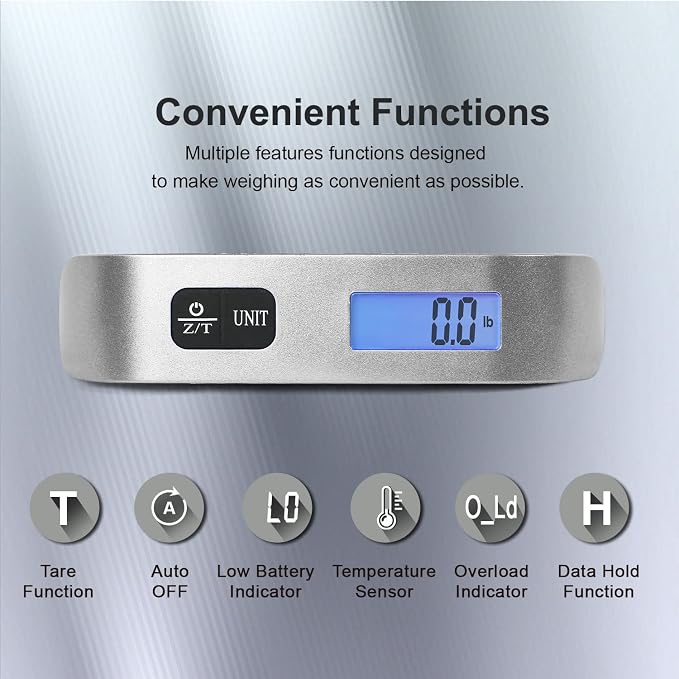

The Travel Inspira Digital Luggage Scale is a compact travel accessory designed to help travelers check suitcase weight before reaching the airport. With a maximum capacity of 110 pounds (50 kilograms), it can handle everything from standard carry-ons to larger checked bags, making it useful for avoiding unexpected overweight baggage fees.
- High Weight Capacity: Measures bags up to 110 pounds or 50 kilograms, making it suitable for most travel luggage.
- Easy-to-Read Display: The backlit LCD screen and data-lock feature make weight readings easier to check.
- Compact Design: Weighing only about 3.5 ounces, it adds minimal bulk to a travel bag.
- Requires Lifting: Travelers must manually lift the suitcase off the ground to obtain a reading.
- Battery Dependent: The digital display requires a CR2032 battery to operate.
- Limited Function: It is primarily designed for weighing luggage and does not provide other packing or organizational features.
The Travel Inspira Portable Luggage Scale is a compact handheld scale that can be attached to a suitcase handle so you can check baggage weight before reaching the airport.
It is particularly useful after using compression cubes or vacuum bags because a suitcase that does not look full may still be surprisingly heavy.
Pack the scale during your trip as well. Souvenirs, shopping, and gifts can significantly increase your luggage weight before the return flight.
17. Leave Some Space for the Return Trip
A perfectly packed suitcase should not necessarily be completely full.
Travelers frequently return home with more belongings than they departed with.
You may collect:
- Souvenirs
- Gifts
- Clothing
- Local products
- Event materials
- Purchases
Leaving approximately a small portion of your suitcase unused gives you flexibility later.
An expandable suitcase can also be helpful on the return journey, provided the expanded dimensions remain suitable for your transportation arrangements.
18. Do a Final Editing Round
Once you think you have finished packing, step away for a few minutes.
Then open the suitcase again.
Look at each nonessential item and decide whether it deserves the space it occupies.
Most travelers can remove at least a few things during this final review.
Eliminating one bulky sweater, unnecessary pair of shoes, or oversized toiletry container can free more space than an elaborate folding technique ever could.
A Simple Space-Saving Packing Formula
If you want an easy system to follow, use this order:
- Create a packing list.
- Build interchangeable outfits.
- Remove duplicate and low-probability items.
- Wear your bulkiest footwear and outerwear.
- Roll flexible clothes.
- Fold structured garments.
- Place clothing in appropriately sized packing cubes.
- Fill shoes with small items.
- Place shoes and heavier objects near the wheel end.
- Fill gaps around cubes with socks and other flexible items.
- Keep toiletries compact.
- Weigh the finished suitcase.
- Remove unnecessary items if the bag is too heavy.
- Leave some room for the return trip.
The result should be a suitcase that feels organized rather than compressed beyond its limits.
Final Thoughts: Pack Smarter, Not Tighter
Knowing how to maximize suitcase space does not require forcing every possession into the smallest possible bag. The most effective approach combines thoughtful planning, versatile clothing, efficient folding, smart organization, and careful use of otherwise wasted space.
Start by reducing what you bring. Then use rolling, folding, packing cubes, shoe interiors, and suitcase gaps to make better use of the available capacity.
Most importantly, remember that space is only one constraint. A suitcase still needs to meet relevant baggage dimensions and weight limits, remain manageable in transit, and allow you to find what you need without completely unpacking it.
The best-packed suitcase is not necessarily the fullest one. It is the one that contains everything you genuinely need, stays organized throughout the trip, and still closes without a struggle.
Frequently Asked Questions
1. What is the best way to maximize space in a suitcase?
The best approach combines several techniques. Pack versatile clothing, roll flexible garments, fold structured pieces, use compression packing cubes where helpful, fill shoes and small gaps with accessories, and wear bulky clothing while traveling. Removing unnecessary items before packing usually saves more space than any individual folding technique.
2. Is it better to roll or fold clothes in a suitcase?
Neither method is best for every garment. Rolling works particularly well for T-shirts, casual clothing, workout wear, pajamas, and other flexible fabrics. Folding is generally better for structured or wrinkle-prone clothing. Combining both methods usually makes better use of suitcase space.
3. Do packing cubes actually save suitcase space?
Standard packing cubes primarily improve organization, although efficient organization can make better use of available space. Compression packing cubes can reduce the volume of soft clothing by using an additional zipper to compress the contents. However, packing cubes do not reduce the actual weight of your belongings.
4. How do I fit two weeks of clothes into one suitcase?
Choose a coordinated wardrobe in which tops and bottoms can be mixed into multiple outfits. Bring fewer shoes, pack travel-size toiletries, use compression cubes for soft clothing, and plan to do laundry during the trip when possible. Packing seven to nine days of versatile clothing and washing some items can be considerably more efficient than carrying 14 completely separate outfits.
5. How can I maximize suitcase space without exceeding the weight limit?
Prioritize lightweight clothing, limit footwear, decant toiletries into smaller containers, and avoid adding unnecessary items simply because compression creates extra room. Weigh the suitcase after packing and check your airline’s current baggage allowance. Remember that compression cubes and vacuum bags reduce volume but do not reduce weight.